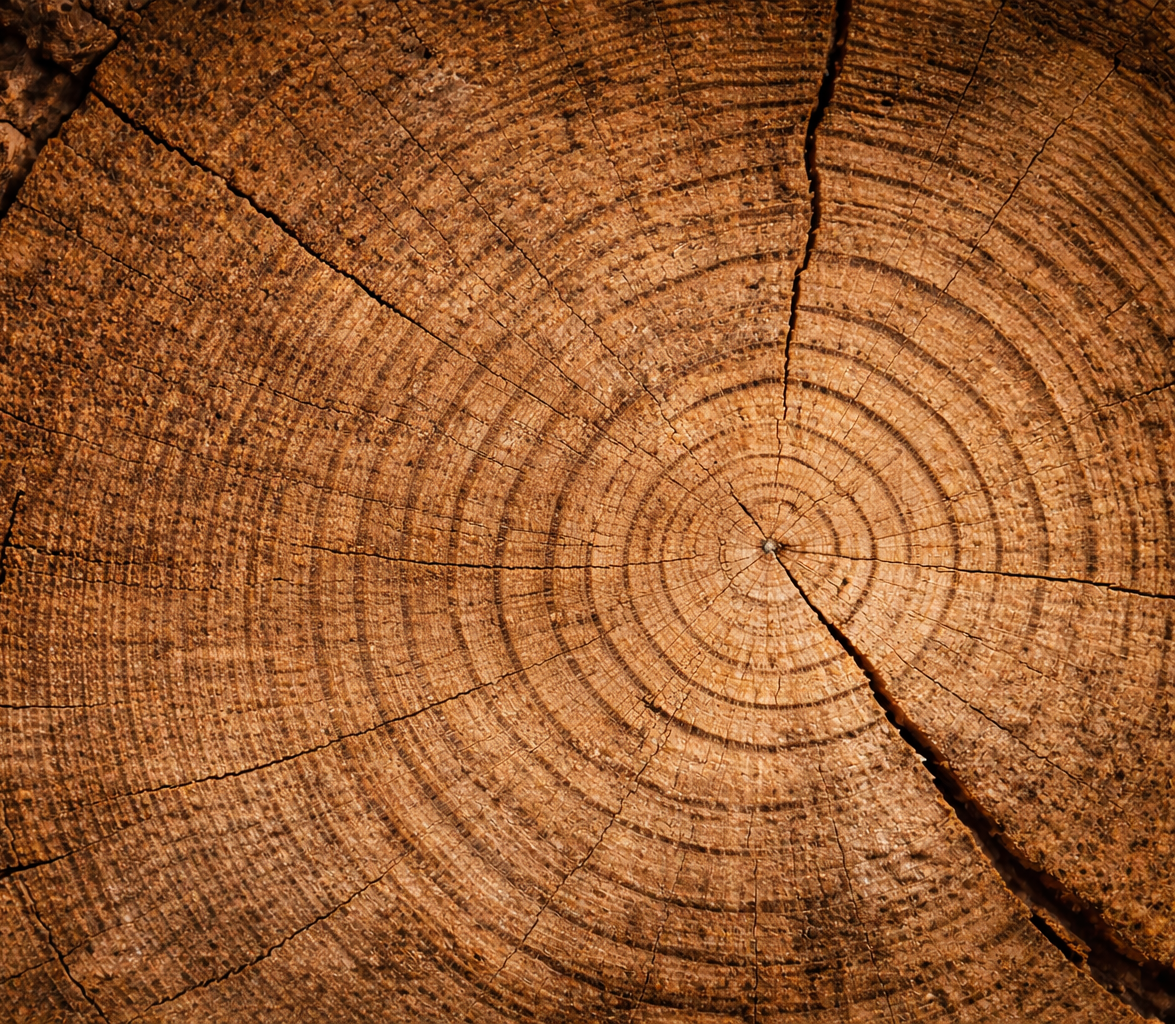
Dendrochronological sampling is a specialist method used to date historic timber by analysing tree-ring patterns. It can provide precise information about when a tree was felled, helping to establish construction phases and better understand the development of a building.
In a conservation context, the process begins with the careful identification and assessment of suitable timbers, ensuring that any sampling is appropriate, minimal, and meaningful.
What is dendrochronology?
Dendrochronology (often referred to as tree-ring dating) is based on the principle that trees grow by adding a ring each year. The pattern of these rings varies depending on environmental conditions and can be matched against established reference chronologies.
By comparing the ring pattern of a timber sample to known sequences, it is often possible to determine the exact year — and sometimes even the season — in which the tree was felled.
What is dendrochronological sampling?
Dendrochronological sampling is the process of carefully extracting a small sample of timber for analysis.
This is typically done using a specialist coring tool, which removes a narrow, cylindrical sample while minimising impact on the structure. The process is designed to be as non-invasive as possible and is only undertaken where appropriate.
Timber identification and assessment
Before any sampling takes place, timber must be assessed to determine whether it is suitable for dendrochronological analysis.
This includes:
- Identifying the timber species
- Assessing condition and preservation
- Checking for the presence of sufficient growth rings
- Determining whether the timber retains its original outer rings (sapwood)
Not all timbers are suitable for analysis, and careful selection is essential to ensure meaningful results.
What happens after sampling?
Once samples are taken, they are sent to specialist laboratories for detailed analysis.
This stage involves:
- Preparing and examining the sample
- Measuring ring widths
- Comparing the sequence to established reference chronologies
This specialist analysis is undertaken by external partners, ensuring accurate and reliable results.
What information can it provide?
Dendrochronological analysis can:
- Provide precise felling dates for timber
- Help identify phases of construction or alteration
- Support dating evidence alongside architectural and historical analysis
- Contribute to a clearer understanding of a building’s development
It is particularly valuable in historic buildings where documentary evidence is limited or uncertain.
A conservation-led approach
Dendrochronological sampling is always undertaken with care and restraint. The aim is to obtain useful information while minimising intervention and preserving the integrity of the building fabric.
Each project is considered individually, ensuring that sampling is justified, proportionate, and appropriate to the significance of the structure.
Leave a Reply